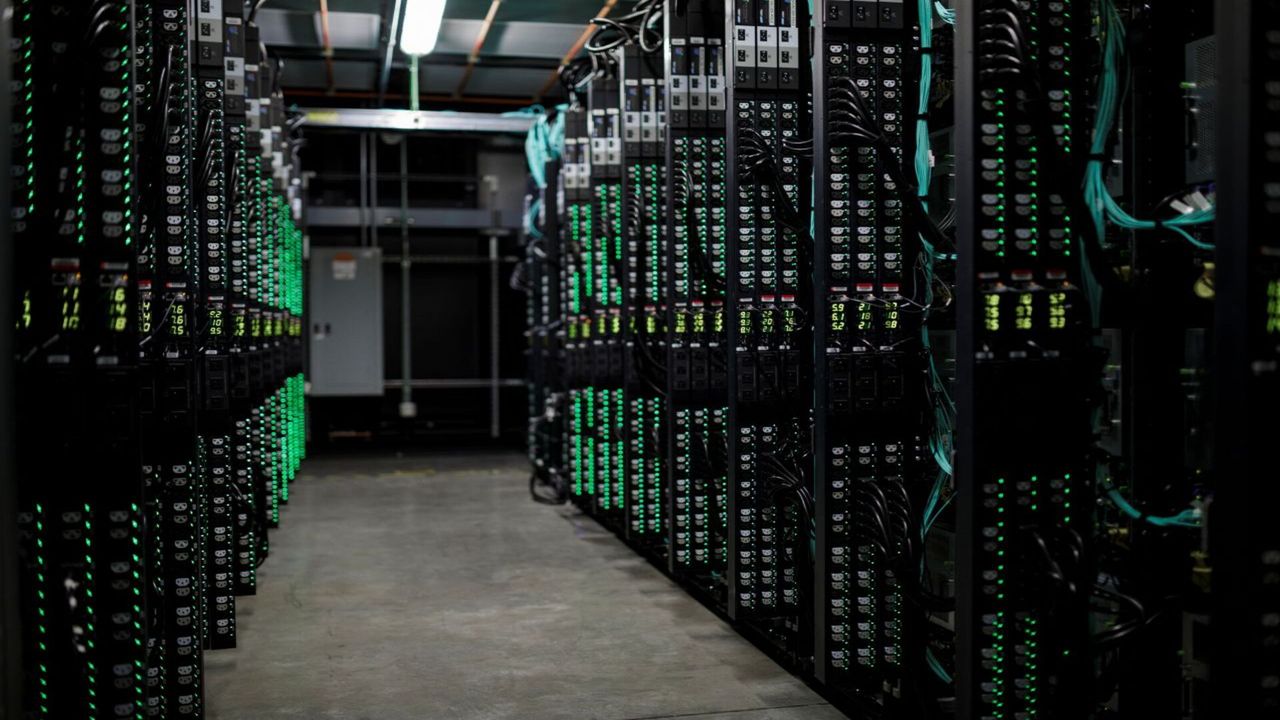
South Korean city bets on the ocean to solve its AI data center crisis — but this is only the beginning
Ulsan is testing underwater data centers to support growing AI workloads The project carries a KRW 51.1 billion (about $37 million) budget through 2030 Seawater could provide cooling without conventional mechanical refrigeration systems South Korean city Ulsan is exploring underwater infrastructure
<![CDATA[ <article> <ul><li><strong>Ulsan is testing underwater data centers to support growing AI workloads</strong></li><li><strong>The project carries a KRW 51.1 billion (about $37 million) budget through 2030</strong></li><li><strong>Seawater could provide cooling without conventional mechanical refrigeration systems</strong></li></ul><p>South Korean city Ulsan is exploring underwater infrastructure as AI computing continues to strain land availability, power grids, and cooling systems nationwide.</p><p>The city is partnering with the Korea Institute of Ocean Science and Technology (KIOST) to design a standardized subsea <a href="https://www.techradar.com/pro/best-data-center-proxies">data center</a> model.</p><p>Officials hope the approach can ease some of the site and cooling constraints that conventional data centers increasingly face across the country.</p><h2 id="building-a-standardized-underwater-model">Building a standardized underwater model</h2><p>The partnership between Ulsan and KIOST runs through 2030, with a combined budget of KRW 51.1 billion (about $37 million) - KRW 40 billion (about $29 million) of which comes directly from the central government, with the remainder covered locally.</p><p>“Ulsan plans to complete the standard model by 2030 and begin developing an underwater data-center complex for commercialization from 2031,” the city said.</p><p>The goal is a working, carbon-neutral template for underwater computing that other sites could later replicate.</p><p>The project will take place in waters roughly 20 meters deep off the Ulsan coastline, where engineers plan to rely on seawater — which averages about 13.3°C annually — as a core part of the cooling strategy.</p><p>Researchers intend to combine pressure-resistant vessel design with hybrid cooling systems described as ultra-high-efficiency by project planners.</p><p>Server units and power distribution equipment will follow standardized modular designs meant to simplify future scaling.</p><p>The team is aiming for an operating efficiency of approximately PUE 1.2 once testing concludes.</p><p>SK Telecom joined the partnership in January 2026, taking on responsibility for GPU-based infrastructure and server operations management.</p><p>In addition to Ulsan and KIOST, other research organizations, academics and industry professionals are part of the project working behind the scenes.</p><p>Their combined role covers everything from vessel engineering to the software layer that will eventually manage AI workloads underwater.</p><h2 id="a-larger-commercial-vision">A larger commercial vision</h2><p>A separate, longer-term concept discussed by the city involves roughly KRW 500 billion (about $360 million) in investment and capacity for up to 100,000 servers.</p><p>This larger sum is not tied to the current phase of work and only reflects what a full commercial buildout could eventually cost.</p><p>Whether Ulsan reaches that scale will depend entirely on how the initial testing phase performs.</p><p>South Korea faces mounting pressure to expand computing capacity as AI workloads multiply across chipmakers, cloud providers, and research institutions nationwide.</p><p>Land near major population centers remains scarce and expensive, pushing planners toward unconventional sites away from crowded urban areas.</p><p>Ocean water offers a cooling resource that requires none of the mechanical refrigeration conventional facilities depend on heavily.</p><p>If the Ulsan demonstration performs as expected, similar underwater sites could eventually spread along other stretches of Korea's coastline.</p><p>For now, the ocean floor represents a promising but unproven answer to Korea's expanding AI infrastructure demands.</p><p>Via <a href="https://www.subseacables.net/infrastructure-news/south-korea-joins-the-race-for-ocean-based-data-centers/" target="_blank" rel="nofollow">SSC Subsea Cables</a></p><figure class="van-image-figure inline-layout" data-bordeaux-image-check ><div class='image-full-width-wrapper'><div class='image-widthsetter' style="max-width:676px;"><p class="vanilla-image-block" style="padding-top:31.51%;"><img id="diM9tpwF2Lz85R8q85CT78" name="tr-g_news" alt="Google logo on a black background next to text reading 'Click to follow TechRadar'" src="https://cdn.mos.cms.futurecdn.net/diM9tpwF2Lz85R8q85CT78.jpg" mos="" align="middle" fullscreen="" width="676" height="213" attribution="" endorsement="" class="inline"></p></div></div></figure> </article> ]]>
Read the full article on TechRadar
Read Full Article →