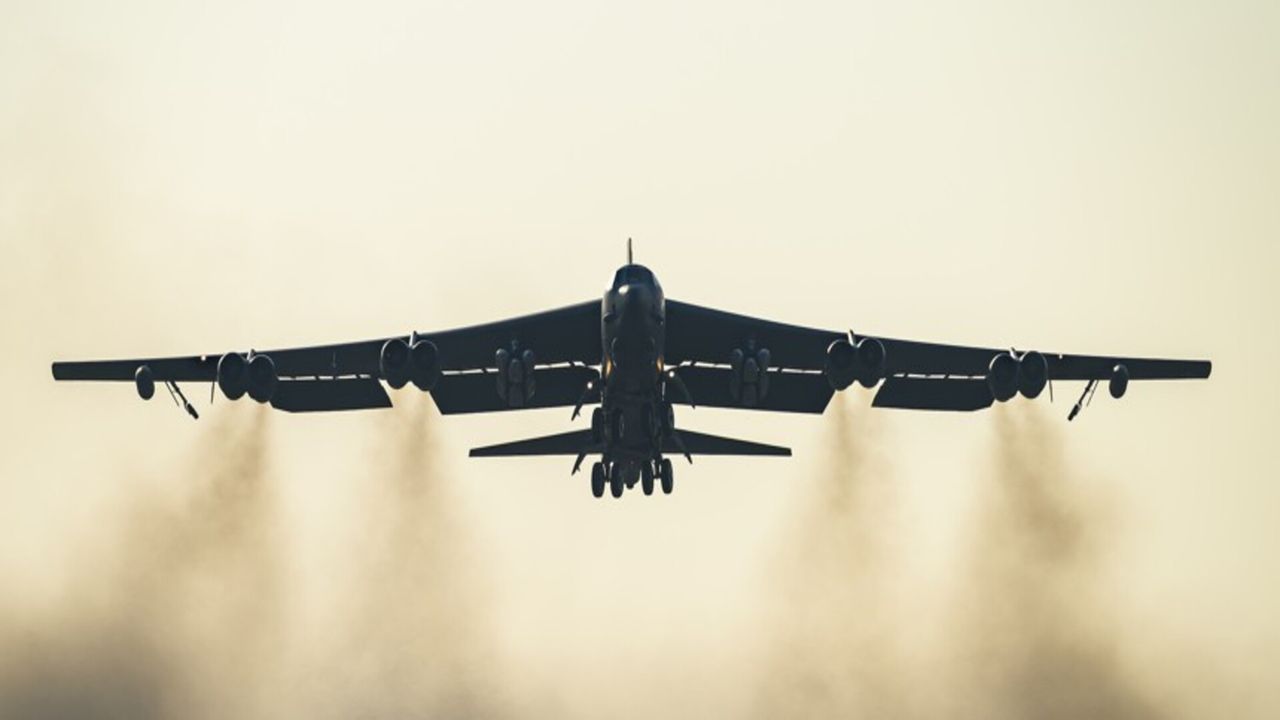
Pentagon is looking for drone bombers, but don't expect a B52 replacement, as they'd carry only an 18 lb payload
Reusable bomber drones join the Pentagon's Drone Dominance Program Payloads must exceed 8 kilograms, matching existing mortar rounds already available Drones must operate 15 to 30 kilometers from their launch positions The Pentagon has expanded its Drone Dominance Program by seeking reusable unmanne
<![CDATA[ <article> <ul><li><strong>Reusable bomber drones join the Pentagon's Drone Dominance Program</strong></li><li><strong>Payloads must exceed 8 kilograms, matching existing mortar rounds already available</strong></li><li><strong>Drones must operate 15 to 30 kilometers from their launch positions</strong></li></ul><p>The Pentagon has expanded its Drone Dominance Program by seeking reusable unmanned aircraft capable of carrying bombs instead of functioning solely as one-way attack systems.</p><p>Unlike traditional strategic bombers, these aircraft are expected to carry payloads exceeding 8 kg (about 18 lb), placing these aircraft in a very different category from long-range bombers such as the B-52.</p><p>According to a new Request for Solutions, the Defence Department is seeking man-packable or light combat vehicle transportable <a href="https://www.techradar.com/cameras/drones/best-drone">drones</a> capable of operating between 15 km and 30 km from their launch positions.</p><h2 id="small-reusable-bombers-instead-of-strategic-aircraft">Small reusable bombers instead of strategic aircraft</h2><p>Officials expect most candidate systems to weigh no more than 55 lb at gross take-off weight, excluding payload, making them substantially smaller than conventional military bombers.</p><p>The required payload exceeds 8 kg and should accommodate mortar rounds or similar munitions already available within existing military inventories.</p><p>Rather than releasing a single weapon before returning home, the aircraft should carry multiple warheads capable of engaging several moving or stationary.</p><p>Potential objectives include enemy personnel, light armoured vehicles, heavy armour, maritime surface craft, landing vessels, and additional battlefield assets requiring precision engagement.</p><p>The Pentagon also requires these systems to remain operational during adverse weather, varying lighting conditions, and attempts to disrupt communications or satellite navigation through electronic jamming.</p><p>Officials also want advanced automation integrated into the aircraft, including autonomous functions and automated target recognition intended to reduce operator workload during combat missions.</p><p>"Vendors shall demonstrate targeting capabilities designed to improve engagement effectiveness, increase delivery accuracy, and reduce operation cognitive workload during target prosecution," the solicitation states.</p><p>Testing will include engagements involving stationary and moving drones, as well as stationary and moving objectives, across different operating heights.</p><h2 id="prototype-competition-will-determine-larger-future-purchases">Prototype competition will determine larger future purchases</h2><p>The Pentagon expects reusable bomber drones to deliver greater reliability than manually piloted first-person-view aircraft. They will be designed for repeated combat operations instead of single-use attacks.</p><p>"Systems with advanced features are expected to achieve better results than simple first-person view (FPV) drones that are manual and rely on continuous operator input," the solicitation adds<strong>.</strong></p><p>The department also said reusable platforms should provide higher reliability and capability than one-way attack systems because they are expected to survive multiple missions.</p><p>Manufacturers that complete the initial qualification stage will advance to a competitive evaluation known as the Gauntlet, scheduled for October, in which military personnel will assess complete operational systems.</p><p>Evaluators will examine aircraft performance together with payload release mechanisms, ground control equipment, and supporting hardware before determining which companies receive prototype awards.</p><p>Following those assessments, the Pentagon plans approximately $32 million in initial prototype contracts covering as many as 1,200 drone systems together with associated logistics packages.</p><p>The prototypes will be delivered within five months after receiving an order, while half of the requested systems must arrive within two-and-a-half months. </p><p>Via <a href="https://defensescoop.com/2026/07/22/pentagon-adds-bombers-to-drone-dominance-program/" target="_blank" rel="nofollow">Defense Scoop</a></p><figure class="van-image-figure inline-layout" data-bordeaux-image-check ><div class='image-full-width-wrapper'><div class='image-widthsetter' style="max-width:676px;"><p class="vanilla-image-block" style="padding-top:31.51%;"><img id="diM9tpwF2Lz85R8q85CT78" name="tr-g_news" alt="Google logo on a black background next to text reading 'Click to follow TechRadar'" src="https://cdn.mos.cms.futurecdn.net/diM9tpwF2Lz85R8q85CT78.jpg" mos="" align="middle" fullscreen="" width="676" height="213" attribution="" endorsement="" class="inline"></p></div></div></figure> </article> ]]>
Read the full article on TechRadar
Read Full Article →