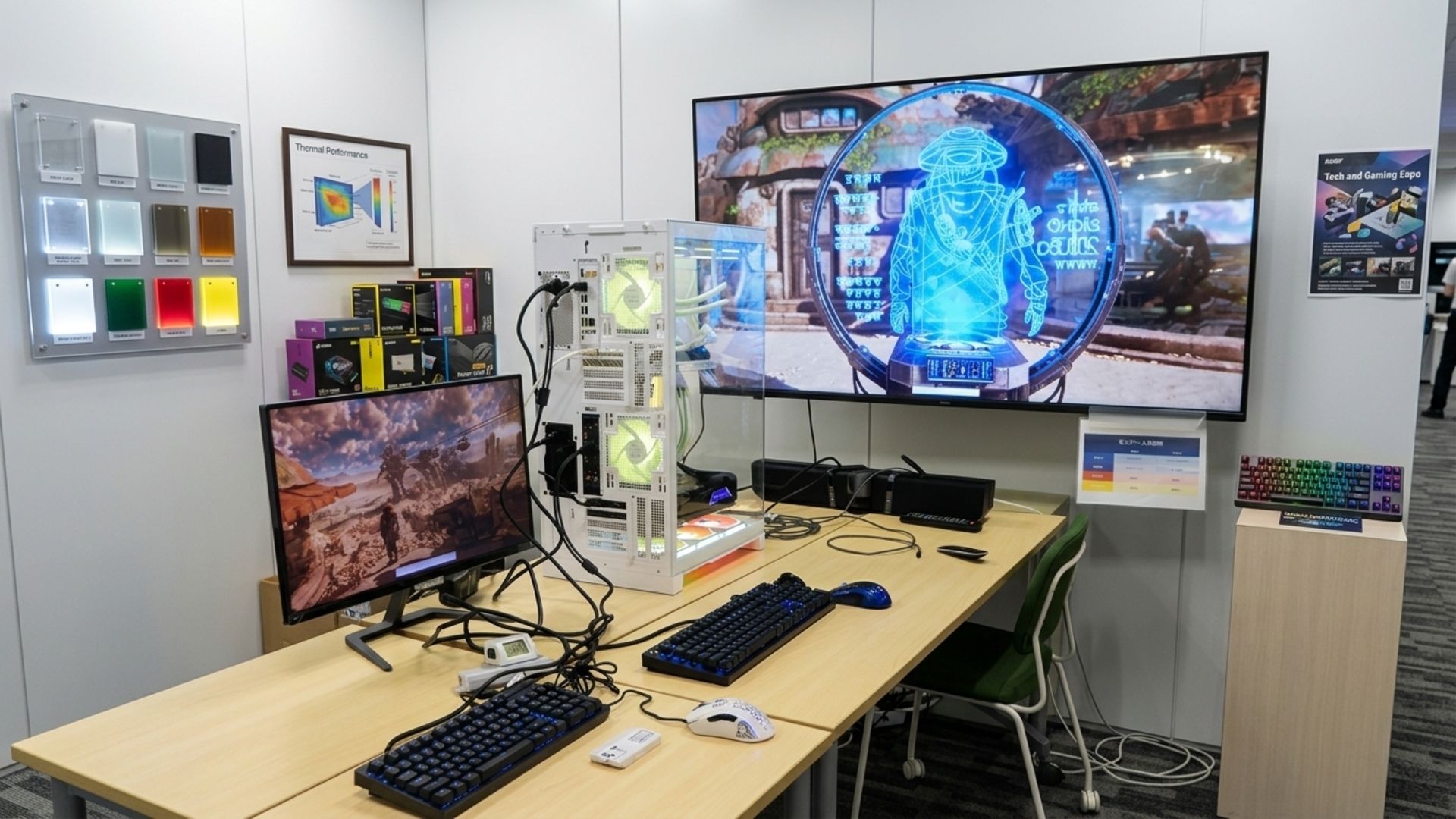
Incredible PC case that packs AMD + Radeon and Intel + GeForce into a single unit gets first review — Thermaltake CAPO X hides the PSU in plain view but remains a build for expert PC DIYers
Thermaltake's CAPO X accommodates two independent computers inside one enclosure The upper Ryzen and Radeon system ran approximately 5°C warmer Both computers maintained stable temperatures during simultaneous stress testing Thermaltake's CAPO X is a full tower case designed to accommodate two indep
<![CDATA[ <article> <ul><li><strong>Thermaltake's CAPO X accommodates two independent computers inside one enclosure</strong></li><li><strong>The upper Ryzen and Radeon system ran approximately 5°C warmer</strong></li><li><strong>Both computers maintained stable temperatures during simultaneous stress testing</strong></li></ul><p>Thermaltake's CAPO X is a full tower case designed to accommodate two independent computer systems within a single enclosure.</p><p>A <a href="https://www.gdm.or.jp/tt_capox_202609_69" target="_blank" rel="nofollow">recent review</a> (originally in Japanese) tested its cooling performance using an AMD Ryzen 7 9800X3D with Radeon RX 9070 XT and an Intel Core Ultra 7 265K paired with GeForce RTX 5070 Ti.</p><p>Both configurations maintained stable temperatures during simultaneous workloads, although testing revealed differences in how heat affected each system.</p><h2 id="two-computers-share-one-enclosure-without-major-overheating">Two computers share one enclosure without major overheating</h2><p>Cinebench 2026 measured processor performance, while 3DMark Steel Nomad Stress Test assessed graphics capabilities under demanding workloads.</p><p>Both configurations delivered sufficient gaming performance individually, while running them simultaneously revealed how heat from one system affected the other's cooling.</p><p>Under sustained workloads, the upper AMD system's Ryzen 7 9800X3D <a href="https://www.techradar.com/news/best-processors">CPU</a> and Radeon RX 9070 XT GPU generally operated around 60°C.</p><p>In the lower configuration, the GeForce RTX 5070 Ti <a href="https://www.techradar.com/news/computing-components/graphics-cards/best-graphics-cards-1291458">GPU</a> reached approximately 60°C, while its Core Ultra 7 265K processor remained near 50°C.</p><p>Temperatures initially climbed when testing began, then settled without substantial fluctuations across either compartment.</p><p>However, running both computers together raised temperatures in the upper system by approximately 5°C compared with operating that configuration independently.</p><p>The temperature difference was attributed to heat from the lower Intel system, which appeared to affect airflow through the upper compartment.</p><p>Warmer air emerging from the upper rear fan supported this explanation, although the test did not establish that every configuration would experience identical temperature changes.</p><p>Installing a faster rear exhaust fan could help remove accumulated heat from the enclosure.</p><p>Adjusting fan placement, rotational speeds, and internal airflow therefore remains important when configuring both systems for sustained workloads.</p><p>The findings suggest that the stacked arrangement does not automatically cause severe overheating under the tested conditions.</p><p>However, the temperature increase in the upper compartment indicates that heat management still requires attention when both computers operate simultaneously.</p><h2 id="complex-assembly-leaves-room-for-experienced-pc-builders">Complex assembly leaves room for experienced PC builders</h2><p>Installing two complete computers requires separate motherboards, power supplies, and storage devices, increasing assembly time compared with conventional single-system <a href="https://www.techradar.com/news/computing/pc/10-of-the-best-desktop-pcs-of-2015-1304391">Desktop PC</a> cases.</p><p>Nevertheless, the enclosure's divided chambers provide considerable cable-routing space, helping builders manage connections from both configurations.</p><p>One drawback identified during assembly was the lack of a fan hub, which could complicate cable management in a dual-system configuration.</p><p>Purchasing a separate controller could simplify connections and give builders more flexibility when coordinating multiple fans across both compartments.</p><p>The CAPO X's unusual layout also requires decisions about how each computer receives and expels air.</p><p>Builders must consider the interaction between compartments rather than treating the enclosure as two entirely isolated cooling environments.</p><p>Assembling the CAPO X case involved more work than building a conventional single-system computer.</p><p>Installing components for two devices requires additional connections, while managing their cooling arrangements introduces additional configuration decisions.</p><figure class="van-image-figure inline-layout" data-bordeaux-image-check ><div class='image-full-width-wrapper'><div class='image-widthsetter' style="max-width:676px;"><p class="vanilla-image-block" style="padding-top:31.51%;"><img id="diM9tpwF2Lz85R8q85CT78" name="tr-g_news" alt="Google logo on a black background next to text reading 'Click to follow TechRadar'" src="https://cdn.mos.cms.futurecdn.net/diM9tpwF2Lz85R8q85CT78-1920-80.jpg" mos="" align="middle" fullscreen="" width="676" height="213" attribution="" endorsement="" class="inline"></p></div></div></figure> </article> ]]>