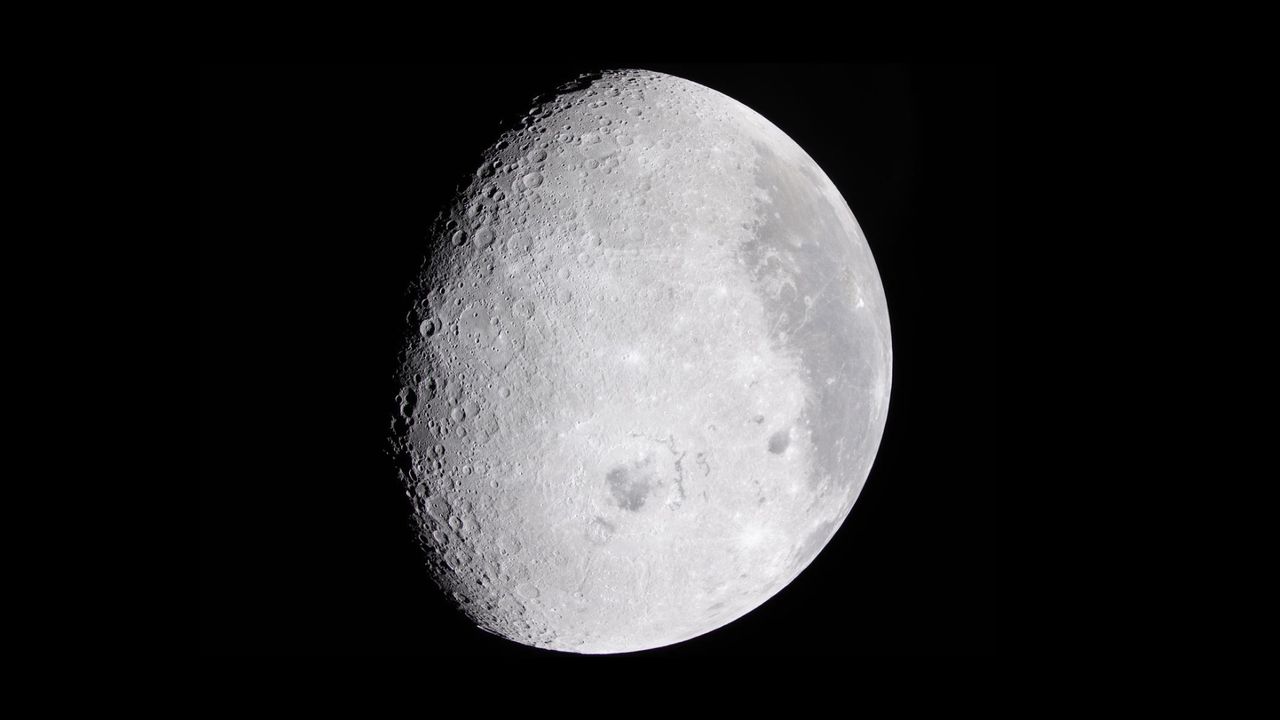
IBM is launching a new open source AI model to get NASA back to the Moon — and making petabytes of lunar data available to study
IBM and NASA launch open source AI model to help further lunar research Researchers will be able to better analyze petabytes of Moon data from last five decades IBM and NASA also release dataset for public usage and analysis IBM has launched a new open source AI model it hopes will help spur on NASA
<![CDATA[ <article> <ul><li><strong>IBM and NASA launch open source AI model to help further lunar research</strong></li><li><strong>Researchers will be able to better analyze petabytes of Moon data from last five decades</strong></li><li><strong>IBM and NASA also release dataset for public usage and analysis</strong></li></ul><p>IBM has launched a new open source AI model it hopes will help spur on NASA researchers in their push to get humanity back to the Moon.</p><p>The new NASA-IBM Lunar Foundation model, available on Hugging Face, will allow researchers to analyze decades of lunar observation data, and identify geological features that are critical to understand for NASA as it looks to build a sustained human presence on the Moon.</p><p>The model has been trained by IBM and NASA researchers on a huge, multimodal NASA dataset, which will also be released alongside the model, providing wider access to the latest advanced AI systems in a bid to push on wider progress in lunar exploration.</p><h2 id="to-the-moon-and-beyond">To the Moon (and beyond)</h2><p>At its most obvious level, the model will allow a much easier way for researchers to study petabytes of data gathered on the Moon's surface for potentially hazardous locations such as ice deposits or craters.</p><p>Currently, scientists often rely on manual analysis or low-resolution, task-specific AI models, which can be not only computationally demanding, but also often lack the accuracy needed for detailed geographic analysis.</p><p>The new release will now mean that instead of needing to build a new AI model for every potential issue, scientists can now adapt a single foundation model to investigate a range of lunar geologic features.</p><p>The model has already proved useful, identifying craters and volcanic features far more accurately (see below) and significantly reducing errors in locating potential ice deposits. </p><figure class="van-image-figure inline-layout" data-bordeaux-image-check ><div class='image-full-width-wrapper'><div class='image-widthsetter' style="max-width:2560px;"><p class="vanilla-image-block" style="padding-top:56.25%;"><img id="pxJth6WmpDYFe9iSBDUeUX" name="Lunar Crater Detection Use Case" alt="IBM NASA AI scanning crater detection on Moon" src="https://cdn.mos.cms.futurecdn.net/pxJth6WmpDYFe9iSBDUeUX.jpg" mos="" align="middle" fullscreen="" width="2560" height="1440" attribution="" endorsement="" class="inline"></p></div></div><figcaption itemprop="caption description" class=" inline-layout"><span class="credit" itemprop="copyrightHolder">(Image credit: IBM)</span></figcaption></figure><p>IBM, which has worked with NASA for over five decades, including on the Apollo missions, believes the model could help future astronauts navigate safely and even find essential resources, as well as helping scientists better understand the Moon's geological history.</p><p>“Uncovering the mysteries of the Moon requires an ability to learn from an extraordinary volume of scientific data,” said Juan Bernabe-Moreno, Director of IBM Research Europe, UK and Ireland.</p><p>“The NASA-IBM Lunar Foundation Model gives scientists a foundation to explore the Moon at scale, connecting observations across instruments, revealing patterns that are difficult to see in isolation, and providing an open platform the global research community can build on.”</p><p>The release of the dataset will mark the first time a unified, publicly-available cache has been made available and ready for machine learning. It brings together over 30 spatially aligned layers from nine instruments across four missions, including tens of thousands of images and maps showing unique geophysical properties of the lunar surface from NASA’s Lunar Reconnaissance Orbiter (LRO) and NASA’s GRAIL mission.</p><p>Identifying lunar ice deposits could be particularly vital, as the presence of both water and oxygen will be crucial to establishing a human base on the Moon, and even creating rocket fuel for future Mars missions.</p><p>Scanning the Moon's volcanic features, known as Iregular Mare Patches, can allow scientists to better understand the Moon's volcanic history and thermal evolution, as well as helping identify potential sites for landing and other surface operations.</p><p>Finally, studying the Moon's craters can offer a wealth of information on its history, including the age of different terrains, their geology, and even the chemical composition of the early lunar interior - as well as again helping to identify safe landing sites without hazards such as steep slopes and boulders.</p><div style="min-height: 250px;"> <div class="kwizly-quiz kwizly-X1ljAO"></div> </div> <script src="https://kwizly.com/embed/X1ljAO.js" async></script><figure class="van-image-figure inline-layout" data-bordeaux-image-check ><div class='image-full-width-wrapper'><div class='image-widthsetter' style="max-width:676px;"><p class="vanilla-image-block" style="padding-top:31.51%;"><img id="diM9tpwF2Lz85R8q85CT78" name="tr-g_news" alt="Google logo on a black background next to text reading 'Click to follow TechRadar'" src="https://cdn.mos.cms.futurecdn.net/diM9tpwF2Lz85R8q85CT78.jpg" mos="" align="middle" fullscreen="" width="676" height="213" attribution="" endorsement="" class="inline"></p></div></div></figure> </article> ]]>
Read the full article on TechRadar
Read Full Article →